1. What is a CIMC flatbed trailer?
2. How long is a CIMC flatbed trailer?
3. What is a CIMC flatbed used for?
4. What is the difference between CIMC flatbed trailer and other brand trailer?
5. How much is a CIMC flatbed trailer?
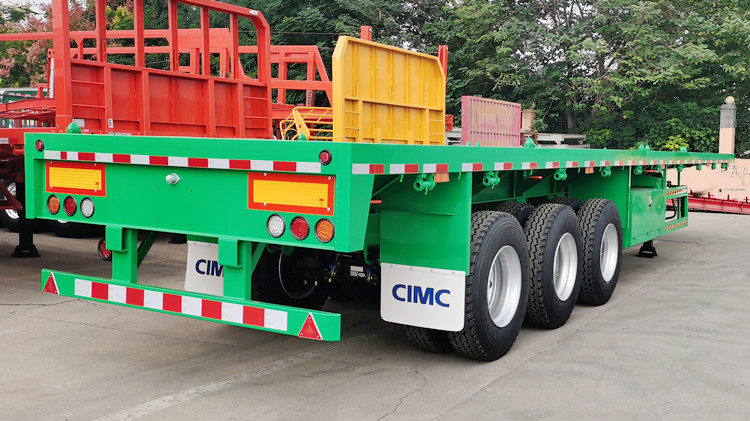
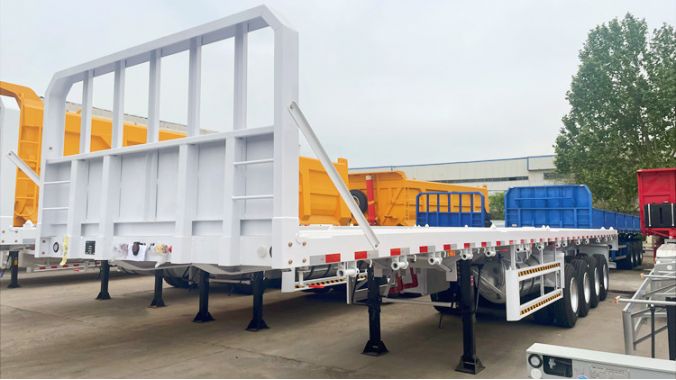
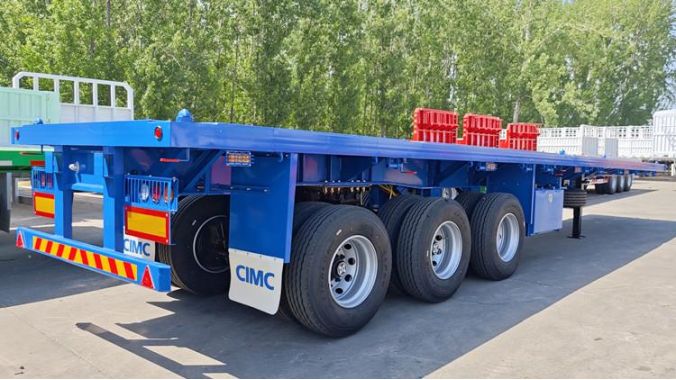
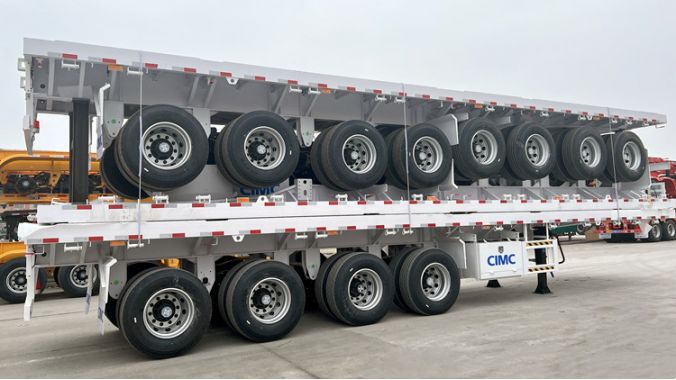
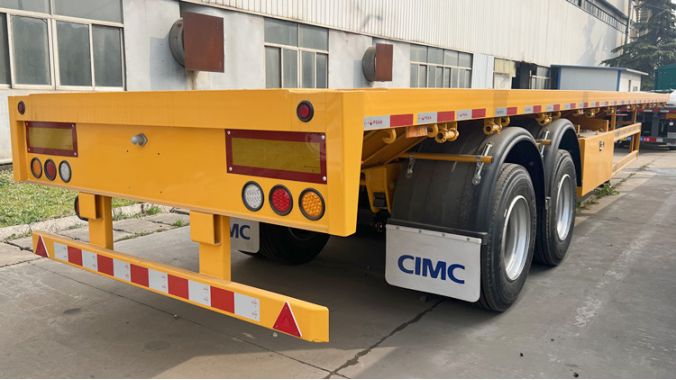
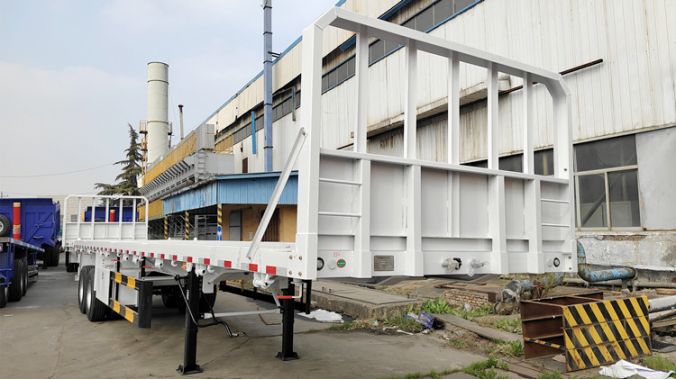
A CIMC flatbed trailer for sale is a type of transport trailer designed with a completely open, level platform and no sides or roof, making it one of the most versatile solutions in the logistics and transportation industry. Industries such as construction, manufacturing, agriculture, and energy frequently rely on CIMC flatbed trailers to move machinery, steel structures, timber, pipes, and large equipment across long distances with efficiency and flexibility.
CIMC flatbed trailer for sale allows cargo to be loaded and unloaded from all directions—front, rear, and both sides—using cranes, forklifts, or other lifting equipment. This open structure is especially advantageous when dealing with oversized, irregularly shaped, or heavy goods that cannot be easily accommodated within the confined space of a box trailer.
What truly sets a flatbed trailer apart is its adaptability to a wide range of cargo types and loading conditions. Because there are no fixed walls or height restrictions, operators can transport taller and wider loads, often securing them with chains, straps, and tarps to ensure safety during transit.
CIMC flatbed trailers are engineered with high-strength steel frames, reinforced decks, and reliable axle systems to support substantial payload capacities while maintaining stability on the road.
Additionally, many flatbed trailers can be customized with features such as extendable decks, removable side rails, or specialized locking systems for containers, making them even more suitable for diverse transport requirements.
This combination of structural simplicity, durability, and operational flexibility makes the CIMC flatbed trailer for sale an essential asset for businesses that demand efficient and cost-effective cargo transportation.
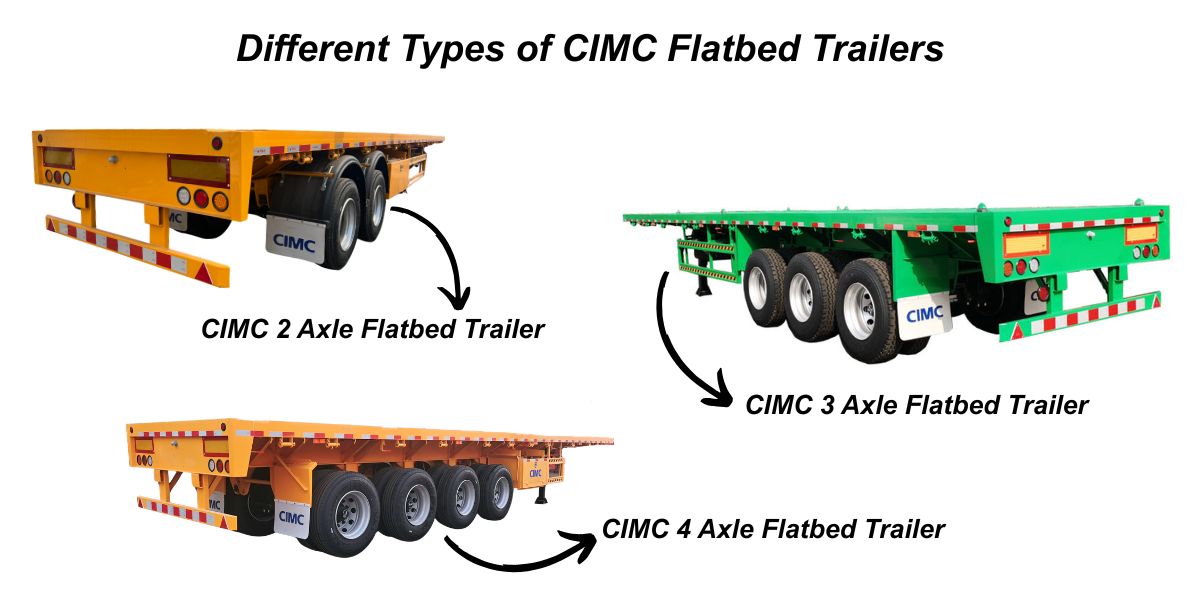
The length of a CIMC flatbed trailer for sale can vary depending on its specific model, configuration, and the transport standards of the target market, but in most cases it follows internationally recognized dimensions designed for container and general cargo transport.
The most common length for a standard CIMC flatbed trailer is around 40 feet (approximately 12 meters), which is specifically engineered to carry a single 40-foot shipping container or two 20-foot containers with secure locking systems.
In some regions, especially where longer combinations are permitted, CIMC also manufactures extended flatbed trailers measuring 45 feet (about 13.7 meters) or even 48 feet to 53 feet for higher-capacity logistics operations. These longer variants are particularly popular in markets that demand greater cargo efficiency per trip, allowing operators to maximize load volume while maintaining road compliance.
Beyond standard lengths, CIMC flatbed trailers are often customized to suit different transportation needs, meaning the actual deck length can be adjusted based on customer requirements and local regulations.
For example, certain African, Southeast Asian, and Middle Eastern markets may prefer slightly reinforced or extended platforms to accommodate bulk cargo, construction materials, or machinery that exceed typical container dimensions.
Despite these variations, the design philosophy remains consistent: providing a stable, durable, and flexible loading platform that aligns with global logistics standards. As a result, while 40 feet remains the industry benchmark, the true length of a CIMC flatbed trailer for sale is best understood as a configurable parameter, tailored to optimize efficiency, safety, and cargo compatibility across different operating environments.
The application of a flatbed semi trailer is exceptionally broad, making it one of the most widely used transport solutions across multiple industries.
Thanks to its open, unobstructed platform, a flatbed semi trailer is ideally suited for carrying oversized, heavy, or irregularly shaped cargo that cannot be easily loaded into enclosed trailers. In the construction sector, for example, flatbed trailers are routinely used to transport steel beams, cement materials, prefabricated structures, scaffolding, and heavy equipment such as excavators and loaders. The ability to load cargo from the sides or top using cranes significantly improves efficiency on job sites, especially when dealing with large-scale infrastructure projects where time and flexibility are critical.
In the logistics and shipping industry, flatbed semi trailers play a key role in container transportation, particularly when equipped with twist locks for securing standard containers. They are commonly used to move 20-foot and 40-foot containers between ports, warehouses, and inland destinations, ensuring seamless intermodal transport. Beyond containerized cargo, these trailers are also essential for hauling industrial goods such as pipes, coils, timber, and machinery, especially in sectors like oil and gas, mining, and manufacturing. Their adaptability allows operators to handle a wide variety of loads without needing specialized trailers for each cargo type, which significantly reduces operational costs and increases fleet utilization.
Agriculture represents another critical application area for flatbed semi-trailers, particularly for large-scale farming operations that move equipment and harvested materials between fields, storage, and markets. Farmers use flatbeds to transport tractors, harvesters, sprayers, and planters that are too wide or too high for an enclosed trailer, often driving the machinery onto the deck via portable ramps. Furthermore, flatbeds are a common sight during haying season, carrying large square or round bales stacked several layers high. While specialized vans with side openings exist, the flatbed’s open design actually aids in keeping the hay dry and ventilated, preventing moisture buildup and mold that can ruin the crop.
In addition, they are often utilized in regions with developing infrastructure, where the ability to quickly load and unload goods without relying on docks or enclosed facilities is a major advantage. With the addition of accessories such as side stakes, tarpaulins, or container locks, flatbed trailers can be easily adapted to meet different transport requirements, further expanding their range of applications. Overall, the flatbed semi trailer stands out as a practical, durable, and cost-effective solution for businesses that require flexible and efficient cargo transportation across diverse operating conditions.
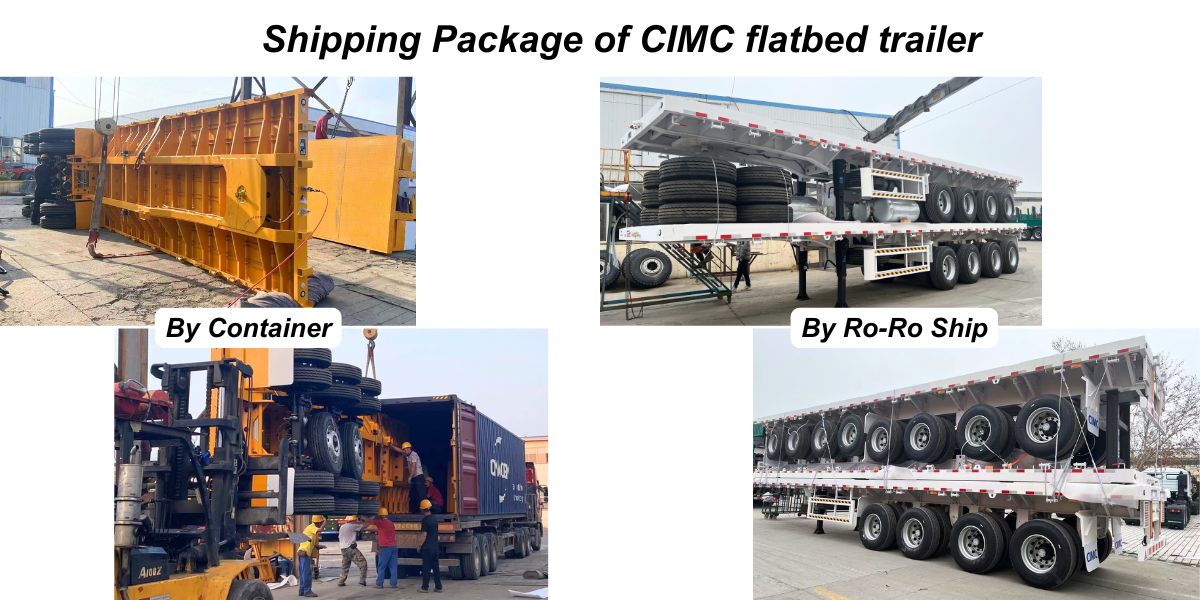
The difference between a CIMC flatbed trailer and other brand trailers is not simply about appearance or basic function—because most flatbed trailers share a similar open-deck design—but rather lies in manufacturing standards, material quality, structural engineering, and global reliability.
CIMC, as one of the world’s largest trailer manufacturers, builds its flatbed trailers with a strong emphasis on high-strength steel structures, precision welding processes, and strict quality control systems. For example, CIMC trailers typically use high-tensile steel for the main beam and chassis, combined with advanced automatic welding technology, which significantly improves load-bearing capacity and resistance to deformation under heavy loads and long-distance transport. In contrast, many smaller or less established brands may rely on lower-grade steel or simpler fabrication methods, which can reduce initial cost but often result in shorter service life, higher maintenance needs, and lower overall durability.
According to product specifications from CIMC, their flatbed semi-trailers are designed to be lightweight without compromising carrying capacity, with independent studies indicating they can carry up to 30% more weight than many competitors in the same class . This is achieved through the use of high-strength steel and optimized frame construction. For example, CIMC's trailer side girders are made from U-shaped steel processed by large bending equipment that maintains the original strength and toughness of the material, while the main girder utilizes Q345B steel plate with a neutral plate height of 500mm . The front end is reinforced with double vertical plates, giving the trailer the dual advantages of reduced weight and high load-bearing capacity . This engineering approach is particularly valuable for logistics operations where maximizing payload per trip directly impacts profitability.
Another key difference lies in component quality and system integration. CIMC flatbed trailers are commonly equipped with internationally recognized components such as WABCO braking systems, JOST landing gear, and well-known axle brands like FUWA or BPW, ensuring consistent performance, safety, and ease of maintenance across global markets. This level of standardization is especially important for fleets operating across different countries, where spare parts availability and service compatibility are critical. Other brands, particularly low-cost manufacturers, may use generic or less reliable components, which can lead to inconsistent braking performance, faster wear, or difficulties in sourcing replacement parts. Over time, this difference has a direct impact on operational efficiency and total cost of ownership, even if the purchase price initially appears lower.
Design philosophy and global adaptability also set CIMC apart. CIMC flatbed trailers are engineered according to international container transport standards, meaning their dimensions, twist locks, and load distribution systems. Additionally, CIMC flatbeds are specifically engineered for optimal container handling, featuring eight twist locks strategically positioned to transport either two 20-foot containers or one 40-foot container, with the ability to accommodate some non-standard container sizes as well. CIMC offers a range of optional equipment including piles, gantry systems, rope tighteners, and rope hooks that significantly expand the trailer's functionality. When installed, these piles can increase the volume of goods transported by up to 20%, making the trailer particularly effective for hauling bulkier items that might otherwise require a different trailer configuration. In addition, CIMC offers a high degree of customization—such as extendable decks, different axle configurations, and suspension options—to meet the specific requirements of markets in Africa, Southeast Asia, the Middle East, and beyond. While other brands may also offer customization, it is often more limited or less refined, lacking the same level of engineering consistency or large-scale production experience.
Finally, the difference is reflected in brand reputation, after-sales support, and global trust. CIMC exports a large volume of flatbed trailers worldwide every year and has built a strong reputation for reliability, durability, and long-term value. This means customers are not just buying a trailer, but also gaining access to established service networks, technical support, and proven performance in diverse and demanding environments. Other brands—especially newer or smaller manufacturers—may compete on price, but they often cannot match the same level of global recognition, proven track record, or lifecycle support. In practical terms, choosing between a CIMC flatbed trailer and another brand often comes down to a balance between upfront cost and long-term performance, with CIMC typically positioned as a higher-quality, more reliable investment for serious transport operations.
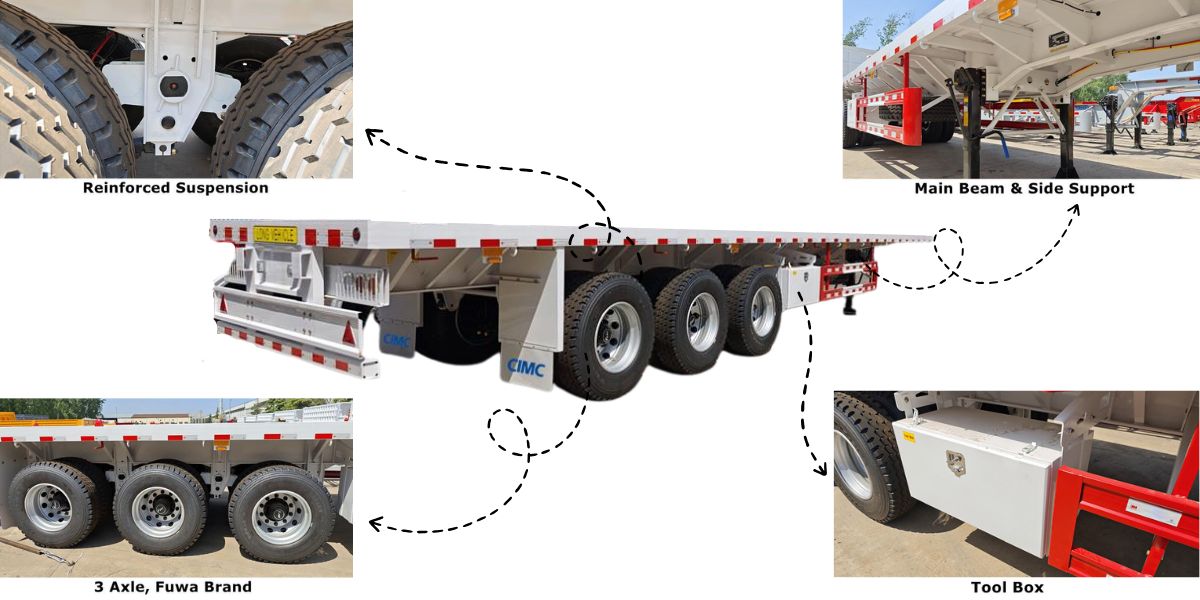
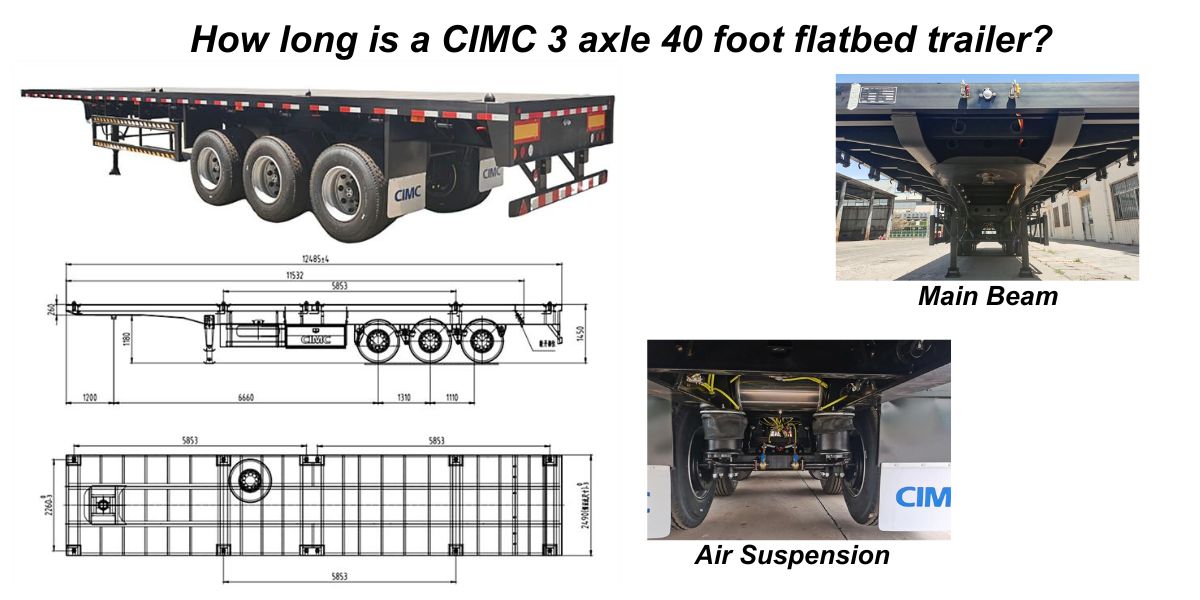
Determining the exact CIMC flatbed trailer prices is not a straightforward matter of quoting a single figure, because the cost varies enormously depending on the trailer's specific configuration, the materials used, the number of axles, the type of suspension system, and even the destination market. Unlike consumer goods with fixed retail prices, commercial semi-trailers are typically built to order or selected from a range of factory configurations, and CIMC as a manufacturer offers one of the broadest spectrums of flatbed designs in the industry. Consequently, a new CIMC flatbed trailer prices can range from approximately 8000 US dollars for a very basic two-axle model intended for light container hauling, to well over 20000 US dollars for a heavy-duty three-axle model equipped with premium components.
The primary reason for such a wide price range lies in the degree of customization and component selection that CIMC offers to its customers. Unlike some Western manufacturers that produce relatively standardized models with limited options, CIMC positions itself as a manufacturer capable of tailoring a flatbed to very specific operational requirements, and each customization adds cost. The number of axles is the most obvious variable: a two-axle flatbed rated for forty tons is significantly less expensive to build and register than a three-axle model rated for sixty tons, and a four-axle heavy hauler designed for eighty-ton loads will be more expensive still. Beyond the axle count, the buyer can choose between spring suspension, which is cheaper and simpler, or air suspension, which provides a smoother ride for fragile cargo but adds several thousand dollars to the price tag. The choice of brand-name components also drives cost variation significantly. A CIMC flatbed equipped with standard, in-house Chinese axles and braking systems will be priced much lower than one fitted with premium European components such as BPW axles, WABCO air brake systems, and JOST landing gear.
Closely related to this is the material and build quality. CIMC typically uses high-strength alloy steel (such as Q345) for durability and weight optimization, but higher-grade materials, thicker beams, or specialized anti-corrosion treatments will push the price up. Trailers designed for harsh environments (like Africa or the Middle East) often include reinforced frames, better coatings, or upgraded welding processes, all of which increase manufacturing cost.
Another crucial factor influencing the CIMC flatbed trailer prices is the intended application and the corresponding structural reinforcements or specialized features built into the unit. A standard flatbed intended for general freight, with a simple steel deck and fixed side rails, represents the most affordable category. However, once the trailer is purpose-built for a specific industry, the price rises accordingly. For instance, a reinforced steel transport vehicle designed to carry multiple heavy steel coils or concrete pipes requires thicker main beams, additional crossmembers, and a heavier-duty floor, often adding thousands of dollars to the base price. Similarly, a flatbed ordered with removable stakes and racks to function as a drop-side or fence trailer for agricultural products such as hay bales or loose building materials will cost more than a plain flatbed due to the additional fabrication work and hardware involved.
Beyond the product itself, market and commercial factors play an important role. Prices vary depending on steel costs, exchange rates, and global demand for trailers. Dealer pricing, shipping costs, import duties, and after-sales service packages also affect what the buyer ultimately pays. When purchasing directly from a CIMC factory in China on an EXW or FOB basis, the CIMC flatbed trailer prices quoted are generally the lowest, often falling into the 10000 to 12000 dollar range for standard configurations, because these prices exclude international shipping, export packing, customs clearance, and any local modifications required for registration in the destination country.
In short, the CIMC flatbed trailer prices are mainly determined by a combination of capacity, configuration, materials, component quality, customization level, and market conditions. That’s why accurate pricing usually requires a detailed specification rather than a generic quote.