1. What is a CIMC container chassis?
2. What is the difference between flatbed and chassis?
3. What are the different types of CIMC container chassis?
4. How long is a CIMC container chassis?
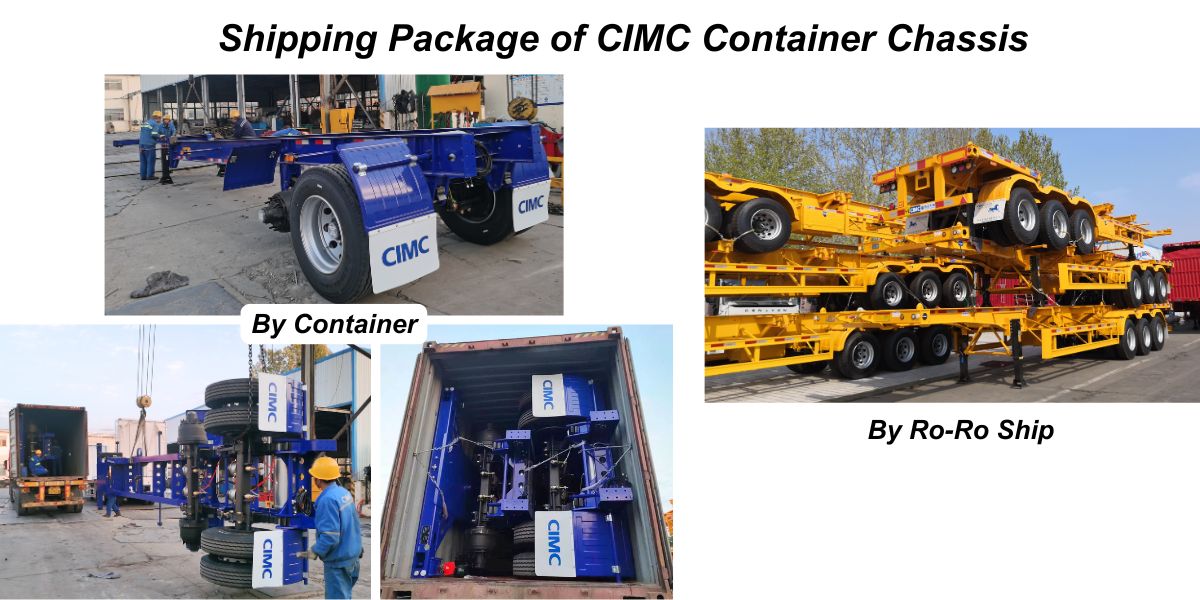
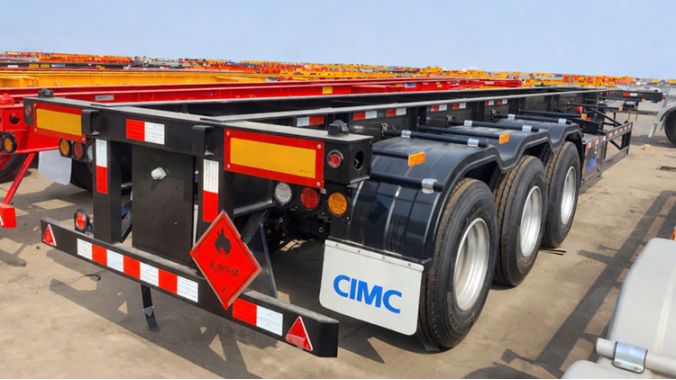
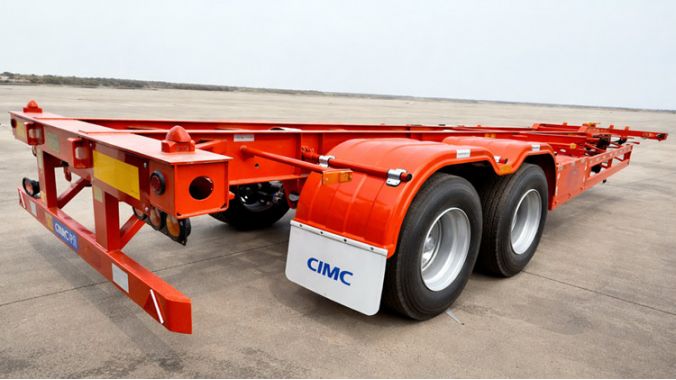
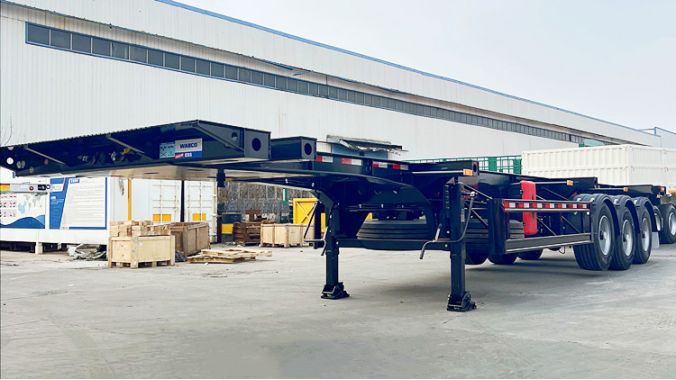
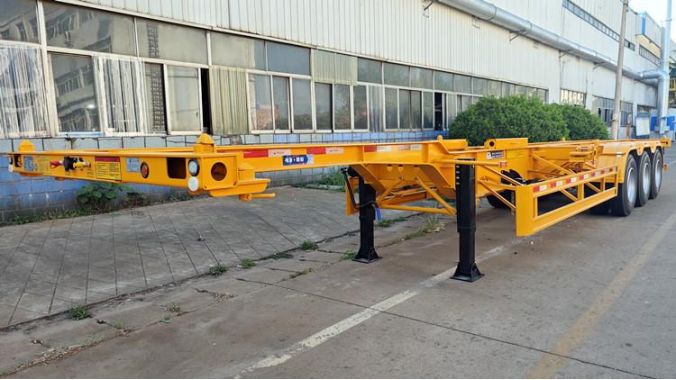
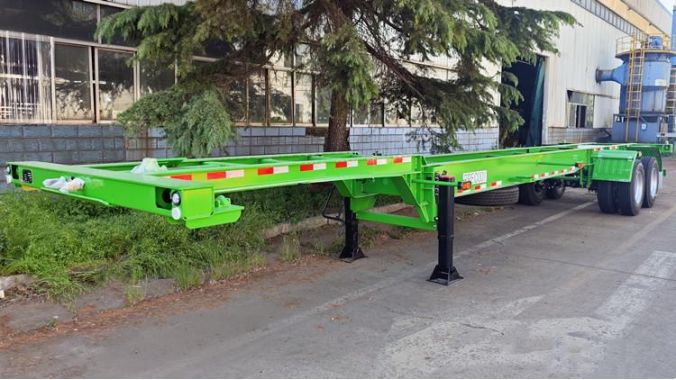
CIMC container chassis is a specialized type of semi-trailer engineered and manufactured by CIMC (China International Marine Containers), which is the world's largest and most dominant producer of intermodal freight equipment. Manufactured by CIMC, it serves as a critical piece of equipment in port logistics, intermodal transport, and long-distance freight operations. Instead of a solid deck like a flatbed, the chassis uses a skeletal frame structure with twist locks that firmly secure containers of different sizes, such as 20-ft, 40-ft, or 45-ft units.
CIMC chassis features a robust steel frame constructed using robotic welding and laser-cut components, which ensures precise fit and superior structural integrity compared to manually welded units. One of the most distinctive features of a modern CIMC chassis is the application of a KTL powder coating process, a form of cathodic electro-deposition coating that is similar to the rust-proofing used on premium car bodies. This coating bonds to the metal at a molecular level, providing exceptional resistance to corrosion from road salt, sea air, and chemicals, which is a critical advantage for chassis that operate in harsh port environments. This finish is often guaranteed to last significantly longer than traditional sandblasting and liquid paint, with CIMC offering warranties of up to ten years against corrosion perforation on some models.
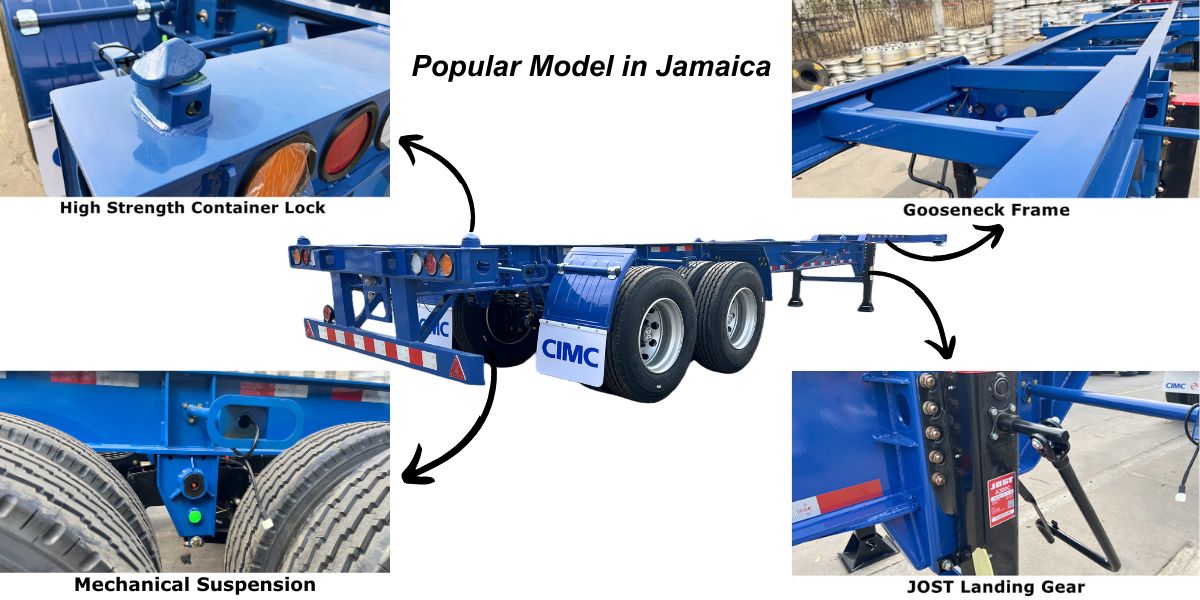
The functional design of a CIMC container chassis is centered around the standard ISO container fittings. The chassis is equipped with a series of twist locks, which are rotating steel pins that match the corner castings of the container. When a container is lowered onto the chassis, the driver or crane operator engages these twist locks, securing the box to the frame in seconds. CIMC produces chassis in various configurations to handle the most common container sizes, including twenty-foot, forty-foot, and forty-five-foot lengths. Furthermore, they manufacture specialized versions such as extendable chassis, which can be lengthened or shortened to accommodate different container sizes on the same trailer, and interlink or "B-train" chassis, which are designed to allow two containers to be pulled in a tandem configuration for high-efficiency port or rail operations.
In terms of safety and operational equipment, CIMC has been a leader in standardization and upgrades. Their chassis are typically fitted with high-quality air brake systems, often including anti-lock braking systems (ABS) as standard equipment, which is a critical safety feature for preventing wheel lockup during emergency stops on wet roads. They also commonly feature durable LED lighting for the taillights, turn signals, and clearance lights, which are brighter and longer-lasting than traditional incandescent bulbs. The chassis includes all the necessary components for legal road use, such as mud flaps, landing gear (the retractable legs that support the front of the chassis when it is not connected to a truck tractor), and a standardized fifth-wheel coupling plate at the front.
In practical use, the chassis acts as the link between ships, trucks, and rail systems, making it a key component in global supply chains. Its design allows drivers to quickly pick up pre-loaded containers and move them without needing to handle the cargo inside, which significantly improves efficiency and reduces handling costs. CIMC container chassis are especially valued for their durability, adaptability to different road conditions, and ability to support high-frequency operations in demanding logistics environments.
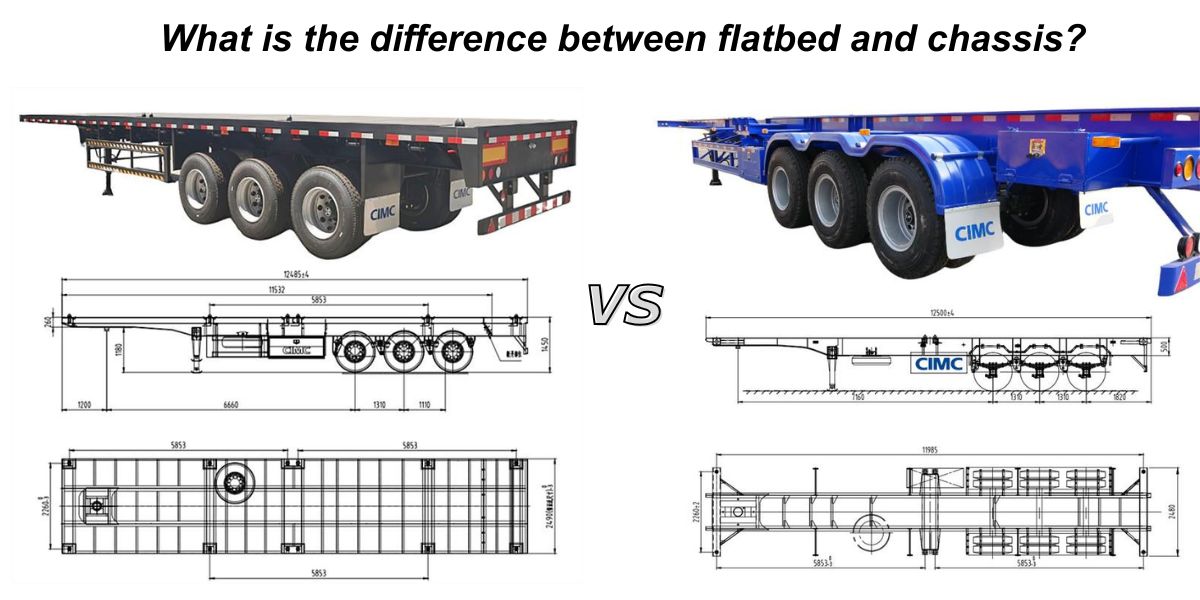
The difference between a flatbed trailer and a container chassis comes down to design purpose, structure, and how they are used in real transport scenarios.
A flatbed trailer is a versatile, general-purpose platform designed to carry virtually any type of load that can be strapped, chained, or blocked onto an open deck. This includes construction materials like steel beams, pipes, and lumber; heavy machinery such as bulldozers and excavators; and even oversized items like industrial tanks or prefabricated buildings. In contrast, a CIMC chassis for sale is a highly specialized piece of equipment with a single, dedicated purpose: to transport intermodal shipping containers. These containers are standardized steel boxes with reinforced corner castings, and the CIMC chassis for sale is built with specific twist locks and a fixed width to accept only those containers. While a flatbed is a jack-of-all-trades, the container chassis is a master of one specific job.
The structural design and deck configuration of the two trailers are starkly different. A flatbed trailer is built with a full, solid deck, creating a completely open platform that can carry almost any type of cargo. This includes construction materials, machinery, steel coils, timber, and oversized equipment. Because there are no side walls or roof, cargo can be loaded and unloaded from any direction, which makes flatbed trailers extremely flexible and widely used across many industries. In contrast, a CIMC chassis for sale has a skeletal frame rather than a full deck, and it is specifically engineered to carry standardized shipping containers like 20ft, 40ft, or 45ft units. It relies on twist locks to secure the container in place, meaning it cannot transport loose or irregular cargo directly.
Another major difference is the cargo securing mechanism. When using a flatbed trailer, the driver or loader is responsible for manually securing the cargo using a variety of hardware. Every piece of lumber, every steel coil, and every machine must be individually chained down or strapped over the top, with edge protectors and tensioning binders. This is a labor-intensive, time-consuming process that requires skill and constant vigilance, as the driver is legally required to re-check the load's tie-downs for the first fifty miles and periodically thereafter. With a CIMC chassis for sale, the securing process is nearly instantaneous and standardized. The container is lowered onto the chassis by a crane or reach stacker, and the driver simply rotates a set of twist locks located at each corner of the CIMC chassis for sale. These twist locks engage the container's corner castings with a quarter-turn, locking the box firmly in place. No straps, no chains, and no individual tie-downs are required for the container itself, representing a massive efficiency gain for port and rail terminal operations.
From a structural and economic perspective, container chassis are typically lighter and simpler because they do not have a full deck, which helps reduce fuel consumption and operating costs when transporting containers. Flatbed trailers, however, are generally heavier and more robust due to their need to support a wide range of cargo types and loading conditions. In short, a flatbed trailer offers maximum versatility, while a CIMC chassis for sale provides maximum efficiency for containerized transport. The right choice depends entirely on whether the cargo is standardized containers or varied, non-containerized goods.
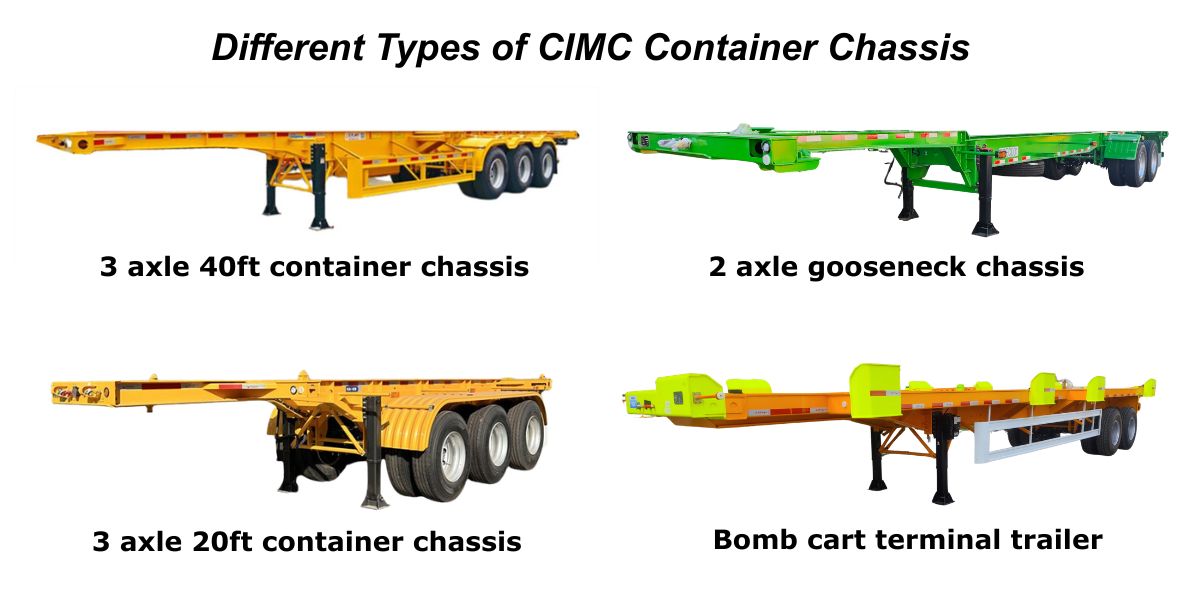
There are three common types of CIMC container chassis: ordinary straight container chassis, gooseneck container chassis, and extendable container chassis. Each of them has significant differences in structural design and usage scenarios, mainly in terms of load-bearing method, transportation capacity, and applicable working conditions.
1. Ordinary straight CIMC intermodal trailer
The standard straight frame CIMC intermodal trailer is the most basic and common type of structure. The entire vehicle features a straight longitudinal beam design, resulting in a simple structure, low manufacturing cost, and relatively easy maintenance. This type of CIMC intermodal trailer is mainly used for transporting standard 20-foot or 40-foot containers, suitable for routine transport tasks between ports and warehouses. Due to its lack of special structural features, it is highly versatile, but its center of gravity control and maneuverability are relatively average, making it more suitable for areas with good road conditions and regular load requirements.
Regarding core performance: The load-bearing surface height of the standard straight-beam frame truck is generally between 1.35 and 1.45 meters (depending on tire specifications and suspension type). The higher load-bearing surface results in a higher center of gravity, and its driving stability, especially crosswind stability, is slightly inferior to gooseneck trucks. However, its greatest advantage lies in its high versatility: CIMC intermodal trailer can transport single 20-foot or 40-foot standard containers and easily achieve "two-container transport"—that is, loading a 20-foot container at the front and adding another 20-foot container at the rear, quickly switching via a lock. This flexibility makes it the main vehicle type for port terminals, railway freight yards, and trailer-swapping logistics.
In terms of application scenarios: Standard straight frame CIMC intermodal trailer is suitable for long-haul transportation, multimodal transport, and general bulk cargo transportation. They are an irreplaceable choice, especially in situations requiring frequent loading and unloading of containers of different sizes. Maintenance costs are extremely low because of their fully mechanical structure, lacking complex hydraulic or telescopic devices; any ordinary repair shop can handle them.
Limitations: The higher center of gravity poses a risk of tipping over when transporting overweight or oversized cargo. Additionally, due to the straight frame, CIMC intermodal trailer cannot lower the front of the container like a gooseneck truck to meet specific road height restrictions.
2. Gooseneck CIMC chassis for sale
The gooseneck CIMC chassis for sale gets its name from its frame's downward-bending and then horizontally extending structure, resembling a swan's neck. Its core design involves maintaining a standard height connection with the tractor's main frame at the towing pin area, then rapidly lowering a step (the drop is typically between 12 and 35 centimeters) to create a low-load-bearing surface, before extending rearward and returning to a straight position. Depending on the degree of gooseneck drop, the industry generally categorizes them as small gooseneck (drop ≤ 121mm, approximately 4 inches) and large gooseneck (drop ≥ 300mm).
Structural Features and Advantages: The most direct benefit of the gooseneck structure is a significant reduction in the overall vehicle load-bearing surface height. This significantly lowers the center of gravity, greatly improving vehicle stability during high-speed cornering or strong crosswinds, making it particularly suitable for transporting dangerous goods tank containers, precision instruments, or fragile goods. The increased overall cargo box height, within the 4-meter height limit, allows for the loading of taller cargo or containers, improving transport efficiency.
Applicable Scenarios: CIMC chassis for sale primarily used for transporting single 40-foot or 45-foot containers. Furthermore, in scenarios with height restrictions (such as bridges or height-restricted road sections), the gooseneck structure can also provide better maneuverability.
Limitations: The structure is more complex than a straight beam, especially the transition area between the gooseneck and the main beam. The manufacturing process requires higher precision, and the manufacturing and maintenance costs are slightly higher than those of a conventional straight frame CIMC chassis for sale.
3. Extendable CIMC container chassis
The extendable CIMC container chassis is the most structurally complex and specialized of the three types. Its core feature is its telescopic frame structure—typically composed of a fixed front beam and a movable rear beam, with length adjustment achieved through internal or external hydraulic cylinders, screws, or mechanical locking mechanisms. The adjustment range is commonly 4 to 8 meters, with some heavy-duty extendable trailers capable of varying lengths from 13 to 20 meters or even longer.
Working Principle and Performance: When transporting long cargo, the operator releases the locking mechanism, using a hydraulic system (or manually turning the screw) to push the rear movable beam outwards to the desired length, then relocks it. The load-bearing surface height is generally between that of a straight beam container chassis and a gooseneck CIMC chassis for sale, but because it needs to carry oversized cargo, the frame is usually made of high-strength, thick steel plates, significantly increasing its weight. A typical straight beam container chassis weighs about 6 tons, while an extendable CIMC container chassis of the same basic length can weigh 8 to 10 tons, and the wheelbase becomes very long after extension, significantly increasing the turning radius and requiring extremely high driver skill.
The unique and irreplaceable application scenario: the transportation of extra-long, extra-heavy, and indivisible specialized cargo. Typical examples include: wind turbine blades (ranging from 30 to 70 meters), large construction machinery (excavators, pavers, rotary drilling rigs), chemical towers, precast bridge beams, and extra-long steel or rails. These goods vary greatly in length, making fixed-length trailers unsuitable. Only extendable CIMC container chassis can flexibly adjust the support point position to meet road transport regulations regarding suspended length and load distribution requirements.
The disadvantages are also significant: the extendable mechanism is a complex and precision component, prone to corrosion or jamming due to long-term exposure to mud, water, and dust, requiring regular maintenance. The complex structure results in extremely high costs, typically 2 to 3 times that of a straight beam container chassis of the same tonnage.
The length of a CIMC container chassis is not a single, fixed measurement. Instead, the overall length is directly determined by the specific type and size of the intermodal container it is designed to carry, and the chassis is always slightly longer than the container itself to accommodate structural components like the kingpin and rear underride protection. For the most common chassis in global intermodal transportation, lengths are standardized for 20-foot, 40-foot, and 45-foot containers.
For a 20 foot CIMC container chassis, the overall length is typically around 23 feet (approximately 7.01 meters). This extra length, roughly 3 feet beyond the container, is necessary to position the chassis components correctly. This type of CIMC chassis for sale is often favored for hauling heavier payloads because the shorter wheelbase allows for more favorable weight distribution over the tractor and trailer axles. The standard width for a 20 foot CIMC container chassis is typically 8 feet (2.44 meters), matching the width of the container. The tare weight, or the weight of the empty chassis, is generally around 6,400 to 6,700 pounds (2,900 to 3,040 kg).
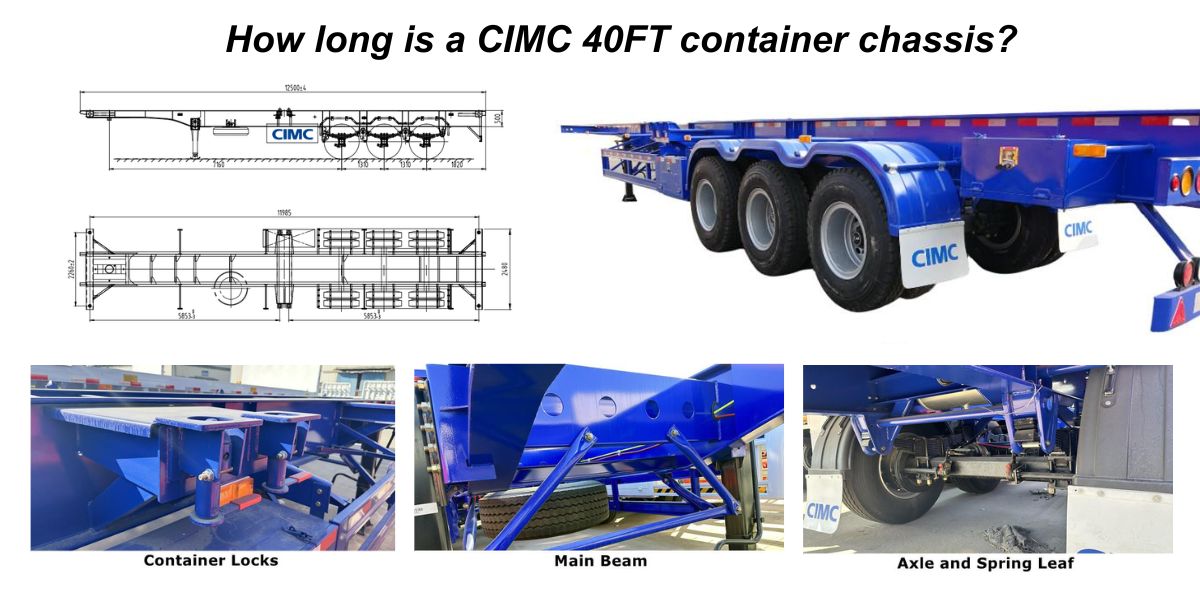
Moving to the 40 foot CIMC container chassis, this is widely considered the most common configuration in intermodal transportation, forming the backbone of regional and long-haul freight movements. The overall length of a 40-foot chassis is generally about 40 feet 8 inches to 41 feet (approximately 12.4 to 12.5 meters). A key component on a 40-foot chassis is the kingpin, the coupling mechanism that connects the trailer to the tractor. Its location is critical and is commonly found at 30 inches or 36 inches from the front of the CIMC chassis for sale, affecting the tractor-trailer gap and weight distribution. As with the 20-foot variant, the standard width is 8 feet (2.44 meters), and the tare weight is only slightly higher, ranging from about 6,800 to 7,230 pounds (3,110 to 3,280 kg).
For 45 foot CIMC container chassis, the total length extends to approximately 45 feet 8 inches to 45 feet 9 inches (about 13.92 meters). This CIMC chassis for sale is designed to accommodate the longer 45-foot ISO containers, which offer greater internal volume. It maintains the standard width of 8 feet (2.44 meters) and has a slightly higher tare weight than the 40 foot CIMC container chassis, typically around 7,231 to 7,400 pounds (3,280 to 3,360 kg). It is important to note that while 45-foot chassis are common, their usage can vary by region.
Beyond these standard fixed-length chassis, there are also extendable or slider chassis. These are specialized designs that can adjust their length to carry containers of different sizes, significantly increasing operational flexibility. A notable difference for these longer chassis is that the width often increases from the standard 96 inches to 102 inches (2.59 meters), allowing for a wider stance and greater stability. The overall height of a chassis is also a critical dimension, especially for operations with height restrictions, and it generally ranges from about 4 feet to 4 feet 7 inches (1.22 to 1.39 meters) depending on the suspension and tire configuration.