1. What is a tipper semi trailer?
2. What are the two types of CIMC tipper trailers?
3. What are hydraulic tipper trailers used for?
4. How much does a CIMC tipper trailer price
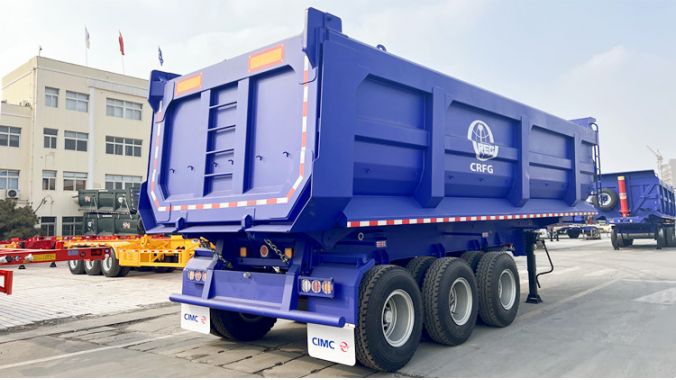
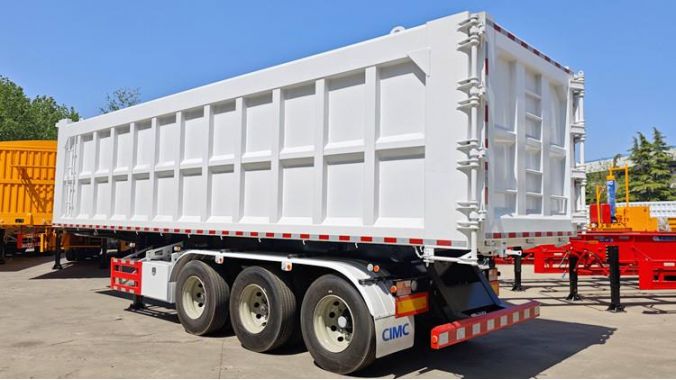
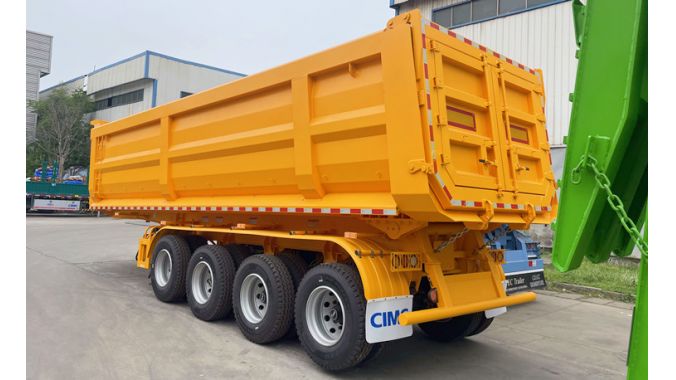
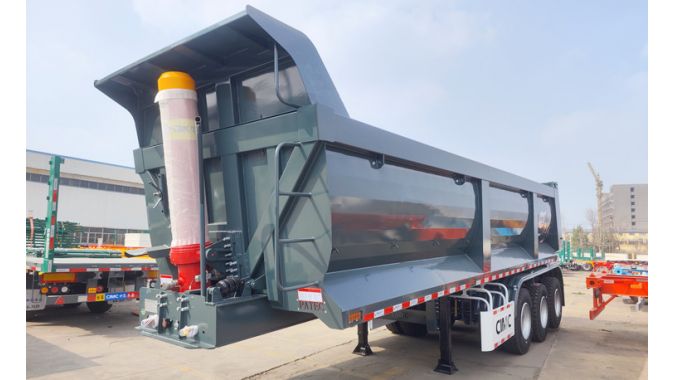
CIMC tipper semi trailer is a specialized self-unloading transport equipment manufactured by various production bases under CIMC Vehicles Group, a globally renowned semi-trailer manufacturer. CIMC tipper semi trailer core unloading method involves a hydraulic system that lifts the cargo box from the front, causing the entire box to tilt backward, allowing the loaded bulk cargo to slide off automatically from the rear under gravity. This design of CIMC tipper semi trailer is widely used in engineering transportation and logistics industries, and is particularly suitable for transporting loose materials such as sand, coal, ore, and grain.
As a leading enterprise in China's semi-trailer manufacturing industry, CIMC tipper semi trailer possess strong market competitiveness in terms of technology, structural design, and operational safety, making them a preferred brand for many logistics companies and individual vehicle owners.
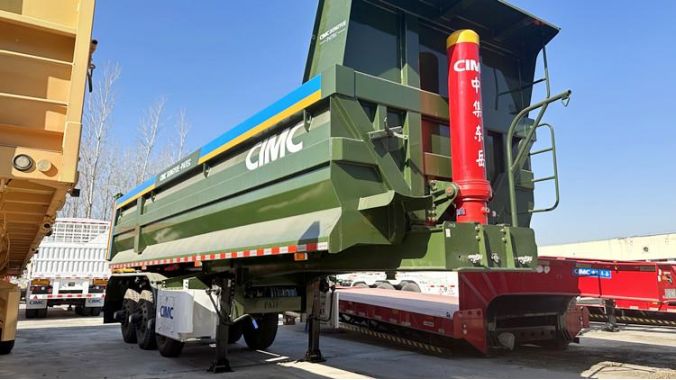
The working principle of CIMC semi tipper trailer mainly relies on hydraulic cylinders installed at the front of the chassis. When unloading is required, the driver controls the cylinders to extend via the hydraulic system. The thrust of the cylinders slowly lifts the front of the cargo box of CIMC semi tipper trailer, causing the entire cargo box to rotate around the rear hinge point, creating a rearward tilt angle. As the tilt angle increases, the material inside the cargo box automatically slides out from the rear. After unloading is complete, the hydraulic system is depressurized, the cylinders slowly retract, and the cargo box returns to a horizontal position under its own weight. The entire process is simple and efficient. CIMC semi tipper trailer has lower requirements for the width of the unloading area, requiring only a certain amount of space behind them to operate. Therefore, they have significant advantages in construction sites, material yards, or narrow road sections with limited space.
Because CIMC semi tipper trailer has a high center of gravity when fully loaded, they are prone to tipping over when driving and turning. Therefore, CIMC employs various methods to lower the overall center of gravity. Some models utilize a sunken frame structure, allowing the cargo box to be partially embedded between the frame beams, effectively lowering the center of gravity of the loaded goods and improving driving stability. Simultaneously, CIMC semi tipper trailer extensively uses high-strength steel in the frame and cargo box materials, and lightweight materials such as aluminum alloys in accessories such as outriggers, wheels, and protective devices, minimizing the overall vehicle weight while ensuring structural strength. The cargo box of CIMC semi tipper trailer has fixed side panels, and a top tarpaulin can be added as needed to prevent dust and material spillage during transportation.
While CIMC tipper semi trailer offer high unloading efficiency, they require strict adherence to specific operating conditions and procedures. During rear-tipping unloading, the cargo box rises, significantly shifting the CIMC tipper semi trailer center of gravity backward and increasing its height. Uneven ground, soft soil, or excessive lateral tilting can easily lead to rollover accidents. Therefore, proper operation requires parking the CIMC tipper semi trailer on a sufficiently flat and firm surface, ensuring the chassis is horizontally level, and being aware of obstacles or pedestrians behind the vehicle during the tilting process.
CIMC typically equips its hydraulic tipper trailer with safety features such as a balanced suspension system, ABS anti-lock braking system, and spiral brake lines. Some newer models also feature hydraulic locking and explosion-proof hoses, preventing the cargo box from suddenly falling even if the hose ruptures. These designs greatly enhance safety in actual use.
Overall, CIMC tipper semi trailer with their mature manufacturing processes, rational structural design, and extensive market validation, have become one of the most representative products in the domestic semi tipper trailer market.
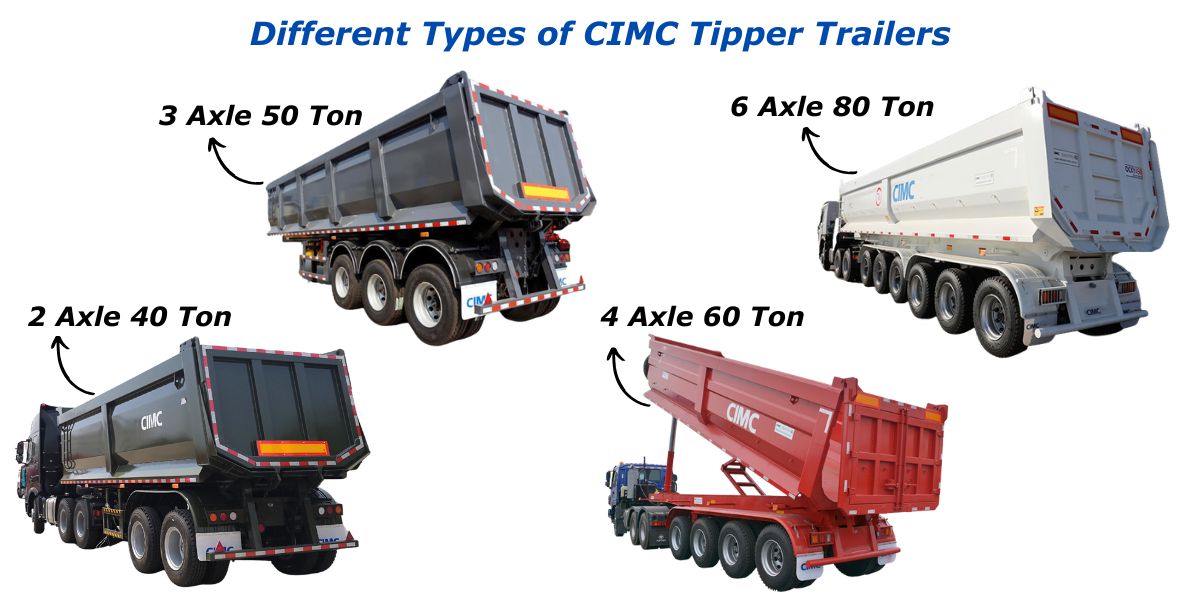
Although end semi tipper trailer and side tipper semi trailer both belong to the broad category of CIMC tipper semi trailer, and both use hydraulic systems to drive the cargo box for autonomous unloading of bulk materials, they differ significantly in unloading principles, structural design, applicable scenarios, and operational safety. Currently, the two main types of CIMC tipper semi trailer on the market that meet national standards are these two models. Users need to make their choice based on actual transportation conditions, unloading site conditions, and cargo type.
1. CIMC End Semi Tipper Trailer
CIMC end semi tipper trailer operate by tipping backwards. The front of the cargo box is lifted by a hydraulic cylinder, and the entire cargo box rotates around the hinge point at the rear, allowing materials to slide out from behind. The biggest advantage of this unloading method is its low requirement for site width; it can operate as long as there is sufficient space behind the CIMC end semi tipper trailer. Therefore, in space-constrained construction sites, narrow material yards, or unloading points near walls, CIMC end semi tipper trailer is almost the only feasible option. However, rear-tipping unloading places extremely stringent requirements on the flatness and firmness of the ground. Because the CIMC end semi tipper trailer center of gravity shifts significantly backwards and rises considerably after the cargo box is lifted, if the ground is sloping to the left or right or the soil is soft, the vehicle is highly susceptible to tipping over.
From a structural design and center of gravity control perspective, CIMC, as a leading domestic semi-trailer manufacturer, has invested heavily in technological optimization for its rear-tipping models to compensate for the inherent stability shortcomings of these vehicles. CIMC end semi tipper trailer generally employ a sunken frame structure. This design allows the bottom of the cargo box to be embedded between the frame beams, effectively lowering the overall center of gravity of the loaded cargo and enhancing safety during driving and lifting/unloading.
Because the stress structure of the CIMC end semi tipper trailer is more concentrated, the overall frame strength is usually higher. Therefore, in mining areas, heavy-duty transportation, and harsh working conditions, CIMC end semi tipper trailer possess greater durability and a longer service life. For customers who need to frequently transport heavy-duty goods over long distances, CIMC end semi tipper trailer has significant advantages in reliability and load-bearing capacity.
CIMC end semi tipper trailer use thicker longitudinal beams and reinforced sub-beams to withstand the pressure from long-term heavy loads and high-frequency lifting. Its hydraulic system is relatively simple, with lower maintenance costs and a more easily controllable failure rate, making it a preferred choice for many mining area transportation customers.
2. CIMC Side Tipper Semi Trailer
CIMC side heavy duty tipper trailer tip over to the left or right, with the cargo box lifted to one side by multiple side-mounted hydraulic cylinders, allowing materials to slide down laterally. The biggest advantage of CIMC side heavy duty tipper trailer is their better stability during unloading, as the center of gravity shifts relatively smoothly when the cargo box tilts, making them more tolerant of uneven ground than end tipper trailers. However, a disadvantage is the high requirement for a wide workspace; sufficient safety space must be reserved on both sides of the vehicle, which is often difficult to meet in confined spaces.
The structural logic of CIMC side heavy duty tipper trailer differs. Due to the need to tilt to both sides, the arrangement of the main beams at the bottom of the cargo box and the lifting mechanism is more complex, typically requiring multiple side-mounted hydraulic cylinders to work together. The overall structural weight is often slightly heavier than a CIMC side heavy duty tipper trailer of the same specifications. However, this structure also brings an advantage: the stress on the cargo box is more distributed during lifting. For large-capacity cargo boxes, the reliability of the side tipping structure can actually be more advantageous under certain heavy load conditions.
The biggest feature of CIMC side heavy duty tipper trailer is their higher unloading efficiency. CIMC side heavy duty tipper trailer use a hydraulic system to tilt the cargo box to the side, enabling rapid unloading of large quantities of bulk cargo. They are particularly suitable for the large-volume, rapid turnover transportation of coal, grain, ore, and lightweight goods. If loading and unloading efficiency and transportation turnaround speed are prioritized, CIMC side heavy duty tipper trailer offer even higher operational efficiency and economic benefits.
However, because CIMC side heavy duty tipper trailer must withstand the enormous torsional forces generated during lateral tipping, they require higher torsional resistance from the chassis, and the hydraulic system and cargo box hinge structure are more complex, thus demanding higher manufacturing standards. CIMC typically enhances chassis stability design in its side-tipping models and uses high-strength steel to reduce overall vehicle weight, thereby improving effective load capacity and fuel economy.
CIMC hydraulic tipper trailer is widely used in various industries, including mining, construction engineering, port logistics, infrastructure construction, and bulk cargo transportation, making them one of the most important pieces of transportation equipment in the heavy duty transportation sector.
Due to their powerful load bearing capacity and efficient self-unloading function, CIMC hydraulic tipper trailer is particularly suitable for transporting bulk cargo such as sand, coal, mineral powder, earthwork, cement clinker, and construction waste. In large-scale mining operations, CIMC hydraulic tipper trailer can frequently shuttle between mines and processing plants, quickly unloading cargo through a hydraulic lifting system, significantly reducing labor costs and unloading time, and improving overall transportation efficiency. For mining companies operating under high-intensity transportation conditions, CIMC hydraulic tipper trailer, with their robust and durable frame structure and excellent impact resistance, can effectively adapt to heavy loads, rugged roads, and harsh operating environments, ensuring long-term stable operation.
CIMC hydraulic tipper trailer also play a vital role in the construction engineering and infrastructure construction sectors. With the increasing number of highways, railways, bridges, water conservancy projects, and urban construction projects, large quantities of sand, gravel, soil, and building materials need to be transported frequently between construction sites. CIMC hydraulic tipper trailer can quickly unload goods directly to designated areas, significantly improving work efficiency at construction sites. Especially in large-scale earthwork projects, where vehicles need to perform multiple loading and unloading cycles daily, CIMC hydraulic tipper trailers' high reliability and high unloading efficiency can effectively reduce downtime and improve project progress. Furthermore, due to CIMC's use of high strength steel materials and optimized design, the hydraulic tipper trailer can reduce their own weight while maintaining load-bearing capacity, thereby increasing effective load capacity and reducing fuel consumption, creating higher economic benefits for transportation companies.
In addition, CIMC hydraulic tipper trailer is also widely used in ports, coal yards, and logistics parks. Many ports need to handle large quantities of coal, ore, grain, and industrial raw materials daily, and CIMC hydraulic tipper trailer can quickly complete the distribution and transportation of bulk cargo. Compared to traditional manual unloading methods, CIMC hydraulic tipper trailer is not only more efficient but also reduce cargo residue and improve operational continuity. CIMC hydraulic tipper trailer used for raw material transportation in large thermal power plants, cement plants, and steel mills. Their stable and reliable hydraulic lifting system enables rapid unloading, meeting the needs of continuous factory production. For customers requiring long distance transportation, the superior chassis stability and suspension system of CIMC hydraulic tipper trailer effectively enhance safety and comfort during high-speed driving.
In the international market, CIMC hydraulic tipper trailer is particularly popular with customers in Africa, the Middle East, Southeast Asia, and South America. These regions generally have needs for mineral resource development, road construction, and port transportation, creating a continuous demand for high-strength transportation equipment. With its mature manufacturing process, reliable quality, and high cost-effectiveness, CIMC hydraulic tipper trailer can adapt to harsh environments such as high temperatures, dust, and complex road conditions, and are therefore widely used in ore transportation, coal transportation, and large-scale engineering projects. For transportation companies, CIMC hydraulic tipper trailer not only improve transportation efficiency but also reduce maintenance costs and downtime, thereby helping customers achieve more stable and long-term operating profits.
The CIMC tipper trailer price is not fixed. Based on current market conditions, a standard configuration CIMC heavy duty tipper trailer typically ranges from 16,000 to 20,000 USD. However, this is only a rough range for reference; the actual transaction price can vary significantly depending on the specific configuration, materials used, technical specifications, and the market environment at the time of purchase. To accurately understand the true value of a CIMC heavy duty tipper trailer, it's crucial to analyze the factors that determine its final price. These factors intertwine to form the complex pricing system of this specialized transport equipment. The core determining factors mainly focus on brand technology and craftsmanship, core configuration and materials, specifications, and the overall market environment.
The specific configuration and steel used in tipper semi trailers are the most direct and flexible variables affecting CIMC tipper trailer price. For heavy duty tipper trailer, the frame bears immense pressure from long-term heavy loads and frequent lifting, therefore, the quality of the steel directly impacts vehicle lifespan and safety. Standard Q345 steel models are relatively inexpensive and more suitable for transporting ordinary sand, gravel, and coal; while models using Hardox wear-resistant steel or high-strength steel, although more expensive, offer significantly improved wear resistance, impact resistance, and service life, making them particularly suitable for mining, heavy-duty conditions, and harsh road environments. High-end wear-resistant steel models often cost thousands of dollars more, but also have a longer lifespan, which is why many large transportation companies prefer higher-configuration models.
The vehicle's dimensions and load capacity directly determine its minimum production cost. The CIMC tipper trailer price is directly proportional to its size and tonnage. From a basic physical consumption perspective, a 13 meter 3 axle heavy duty tipper trailer requires significantly more steel and involves more complex welding and structural reinforcement compared to a 9.5 meter 2 axle model. The materials used for its frame beams, floor plates, and side plates increase substantially, directly raising the cost of basic materials. Furthermore, vehicles with higher load bearing capacity require greater strength in their frame structure, potentially necessitating thicker steel plates or more complex reinforcement structures in key load-bearing areas, further increasing manufacturing costs.
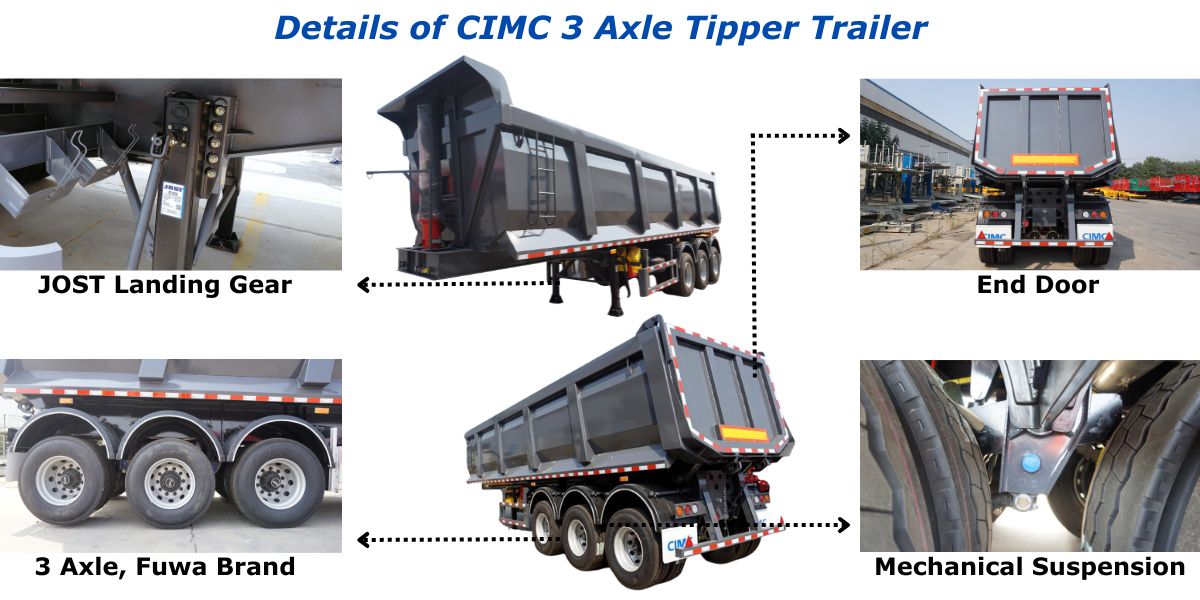
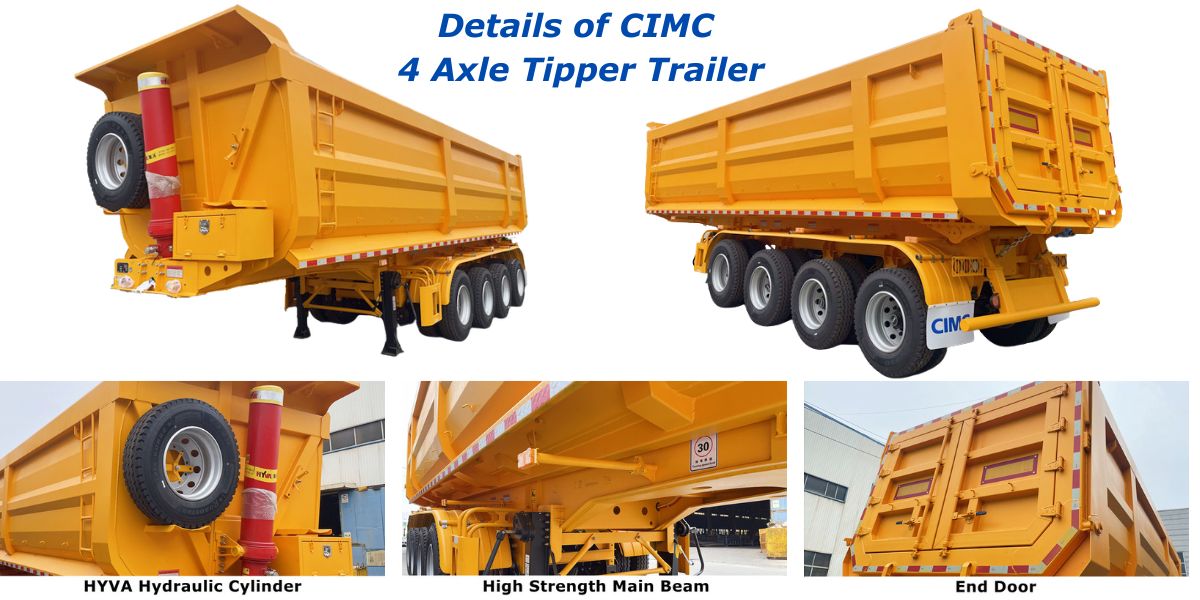
The hydraulic lifting system is also a crucial factor influencing the CIMC tipper trailer price. The core function of a heavy duty tipper trailer is to stably and efficiently lift and unload cargo; therefore, the quality of the hydraulic system directly determines the vehicle's working efficiency and safety. Many high end CIMC rear tipping models utilize HYVA hydraulic cylinders, WABCO braking systems, and FUWA or BPW axles. While these international brand components are more expensive, they offer superior stability, lifting speed, and failure rate control, making them particularly suitable for high-frequency, high-intensity transportation environments. Compared to standard hydraulic systems, imported hydraulic configurations typically add thousands of dollars to the cost, but effectively reduce subsequent maintenance expenses and downtime risks.
In addition, the number of axles, suspension type, and vehicle size directly affect the CIMC tipper trailer price. Generally, 3 axle models are cheaper than 4 axle or 5 axle models, and mechanical suspension models are cheaper than air suspension models. If customers require higher load capacity, larger cargo box volume, or stronger off-road performance, the vehicle needs additional reinforced beams, thicker floor plates, and a higher-level suspension system, all of which increase manufacturing costs. Furthermore, different countries have different transportation regulations and operating conditions, and many export models need to be customized for local markets. For example, the African market typically requires a reinforced chassis and thicker steel plates, the Middle Eastern market prioritizes durability under high temperatures, and the South American market may focus more on lightweight design and fuel economy. Therefore, different configurations for different countries will result in significant differences in the final CIMC tipper trailer price.
Furthermore, international shipping costs, tariffs, exchange rates, and customer customization requirements will also greatly influence the final transaction CIMC tipper trailer price. For example, the logistics costs of the same rear-tipping semi-trailer can differ by thousands of dollars depending on whether it is transported by container, bulk carrier, or roll-on/roll-off ship. Therefore, for many customers, the CIMC tipper trailer price is not fixed, but is determined by a combination of transportation needs, operating conditions, and configuration options.